The Landmark That Becomes a Shortcut for the Whole Town
Learn how to describe a town landmark without letting one famous feature flatten its neighbourhoods, daily routines, and distinct local voices.
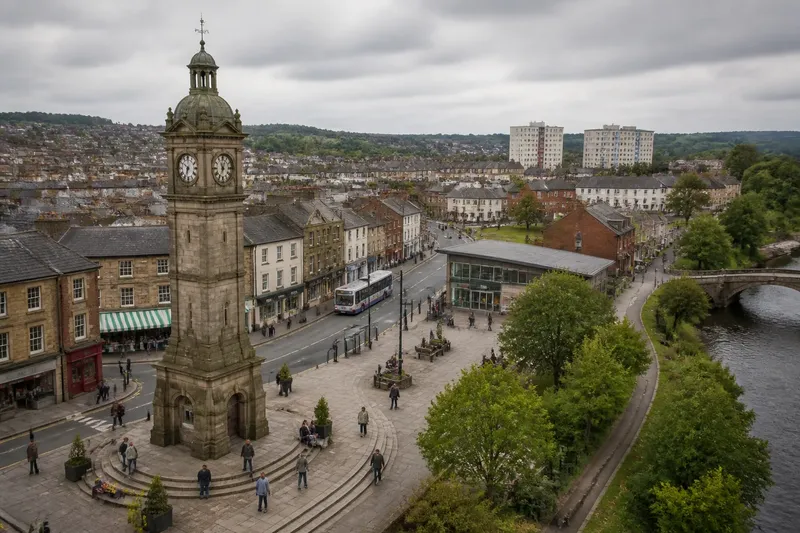
You ask someone where they live, and they name the old clock tower—even though their home is several neighbourhoods away. The tower is the town’s easiest landmark to picture, but it is not a map of the whole place. Describing a town landmark well means showing what it helps people see, then making room for everything it cannot represent.
Why does one landmark stand in for an entire town?
A landmark offers a quick mental image. A lighthouse, courthouse, bridge or hilltop monument can be easier to remember than a collection of residential streets and ordinary destinations. Visitors may use it to orient themselves; local businesses may put it on signs and souvenirs; residents may mention it when explaining where they are from.
That shorthand is convenient, and often affectionate. It becomes a problem when convenience turns into a claim that the landmark captures the town’s character. A striking building can be famous without being central to everyone’s routine, and a well-known view may leave out places where daily life actually happens.
Ask what the shorthand is doing. Is it helping someone recognize the place, or is it being asked to explain the people who live there? Those are different jobs. A landmark can make an excellent point of reference while offering only one partial view of the town.
What can a landmark tell you—and what can’t it?
A landmark can tell you something specific about its setting and use. A ferry terminal may connect the waterfront to nearby islands. A market hall may draw people from several neighbourhoods. A statue at a busy junction may reveal which stories public authorities chose to place in view. These observations are grounded in what someone can see or verify.
But a building’s appearance does not speak for every resident. Its age, style or fame cannot, by itself, establish how people feel about it, who visits, or which local concerns matter most. Even an inviting public forecourt may be hard to use for someone facing a steep approach, a crowded entrance or a long walk from transit.
Separate visible details from interpretation. “The library’s glass entrance faces the bus station” describes a relationship someone can check. “The library is where the town comes together” is broader: it needs context and may not be true for people who use other gathering places. Precise language keeps an attractive image from quietly becoming an unsupported portrait.
How can you describe a landmark without making it the whole story?
Give the landmark a clear role, then locate it among other parts of local life. Name what it is, where it sits and what people can do nearby. If the place serves as a useful meeting point, say that. If it draws visitors but sits apart from the routes residents use for errands, say that too.
Compare the landmark with a few different kinds of places, not a parade of attractions. A school entrance, a corner shop, a riverside path and a community hall may each reveal a different relationship to the town: getting children to class, buying everyday necessities, taking an evening walk or meeting neighbours. The point is not to claim these places represent everyone, either. It is to show that the landmark shares the scene.
Say you are writing about a bell tower above a central square. You might note that it is easy to spot from the market street, then explain that the nearby clinic and bus stop are more relevant to some residents’ daily trips. That small shift gives readers a usable image and a more honest sense of the town’s varied routines.
Details of access can make the description more helpful. Mention whether a landmark is visible from a public path, whether the entrance is on the quieter side of the building, or whether nearby seating is open to passersby. Avoid presenting one route or vantage point as everyone’s experience; describe what is available without assuming who can use it.
Whose point of view is missing from the landmark story?
Start by noticing who is doing the describing. A visitor may see a landmark as a destination; a shopkeeper beside it may see a source of foot traffic; a nearby resident may mostly notice delivery vans or event crowds. None of those views automatically settles what the landmark means to the town.
Then look for people and places that a postcard view tends to crop out. Are there residential blocks beyond the main approach? Does the town have a district shaped by a different industry, language or landscape? Are everyday gathering places spread across several neighbourhoods? Naming such differences can complicate the story without turning residents into symbols.
Take care with claims about local consensus. “Residents love the tower” turns a possible impression into a sweeping statement. “The tower appears on local signs and is a familiar meeting point” is narrower and easier to substantiate. If you have no basis for describing residents’ opinions, leave their feelings open rather than supplying them.
It is not worth forcing every landmark description to mention every neighbourhood or group. That can make a small passage cumbersome and still leave someone out. Choose the context that changes how a reader understands this particular place, and be explicit when your view is partial.
How should a landmark story handle memory and disagreement?
Describe the layers that are plainly relevant: how the landmark is used now, what it commemorates, and whether its public meaning is contested. A monument may be a familiar meeting point and also prompt disagreement about whose history it honors. Stating both facts is more informative than pretending that fame settles the argument.
Keep observation and community interpretation distinct. You can identify a plaque’s wording or note that a public meeting concerns a proposed change. Do not turn either detail into a claim that everyone agrees about the landmark. If you are writing about a specific dispute or historical claim, check reliable local records and represent the people involved accurately.
Not every description needs a full account of the past. Include history when it explains the landmark’s present role or the way people encounter it. Otherwise, a concise note may serve readers better than an elaborate backstory that pulls attention away from the place as it is used now.
What do readers want to know about a town landmark?
Can one landmark represent a whole town?
It can act as a recognizable symbol, but it cannot stand in for every neighbourhood, routine or point of view. Describe it as one important feature of the place, not as a complete account of local life.
What details make a landmark description useful?
Give readers its location, visible features and relationship to nearby streets or public places. Add practical context, such as what lies close by or which public route offers a view, without assuming every reader can use the same approach.
How can you avoid speaking for local residents?
Use observable details and attribute opinions only when you have a sound basis for doing so. Avoid phrases such as “everyone knows” or “the town loves” when they imply consensus you cannot establish.
Should a landmark’s contested history be included?
Include disagreement when it affects how the place is understood or used now. Distinguish verified details from competing interpretations, and consult dependable local sources before making claims about specific events or groups.
How can you check whether the description feels balanced?
Read the passage once without looking at the landmark’s name. Does it still tell a reader something about the town beyond the landmark’s appearance? If not, add a concrete relationship: a nearby route, a different kind of public place, or a daily activity that puts the feature in context.
Then check each broad claim. Replace “the heart of town” with a precise description if the phrase suggests more than you can support. A landmark may be a central meeting point, a prominent silhouette or a popular visitor stop; those descriptions are clearer because they say what kind of importance you mean.
Finally, preserve the landmark’s appeal without making it carry the whole story. The old tower may still be the easiest way to recognize the skyline. A more complete account also notices the bus stop below it, the market street beyond it and the neighbourhoods that do not appear in the view. That is how a town landmark remains vivid while the town stays larger than its symbol.